
Explore Cards, Symbols & Traditions

Discover how tarot cards, runes, oracle decks and grimoires are used across different esoteric traditions, what sets them apart and which might be the right choice for you.
Four Ways to Explore Symbolism
🔮 Discover Tarot
A structured card system that brings together imagery, symbolism and different card spreads to explore questions and interpretations.
ᚱ Get to Know Runes
Symbols rooted in historical writing systems that have also found a place in modern esoteric and spiritual practices.
📖 Create Your Own Grimoire
A personal space to collect notes, symbolic meanings, correspondences, reflections and experiences.
✨ Find the Right Tool for You
Tarot cards, oracle decks, runes, pendulums… Each offers a different approach, and there's no need to use them all together.
Tarot, Runes or Oracle Cards: Where Should You Begin?
Step inside an esoteric shop and you'll discover a fascinating mix of illustrated cards, engraved stones, pendulums, crystals and decorative notebooks. While these products may sit alongside one another, each has its own purpose and background.
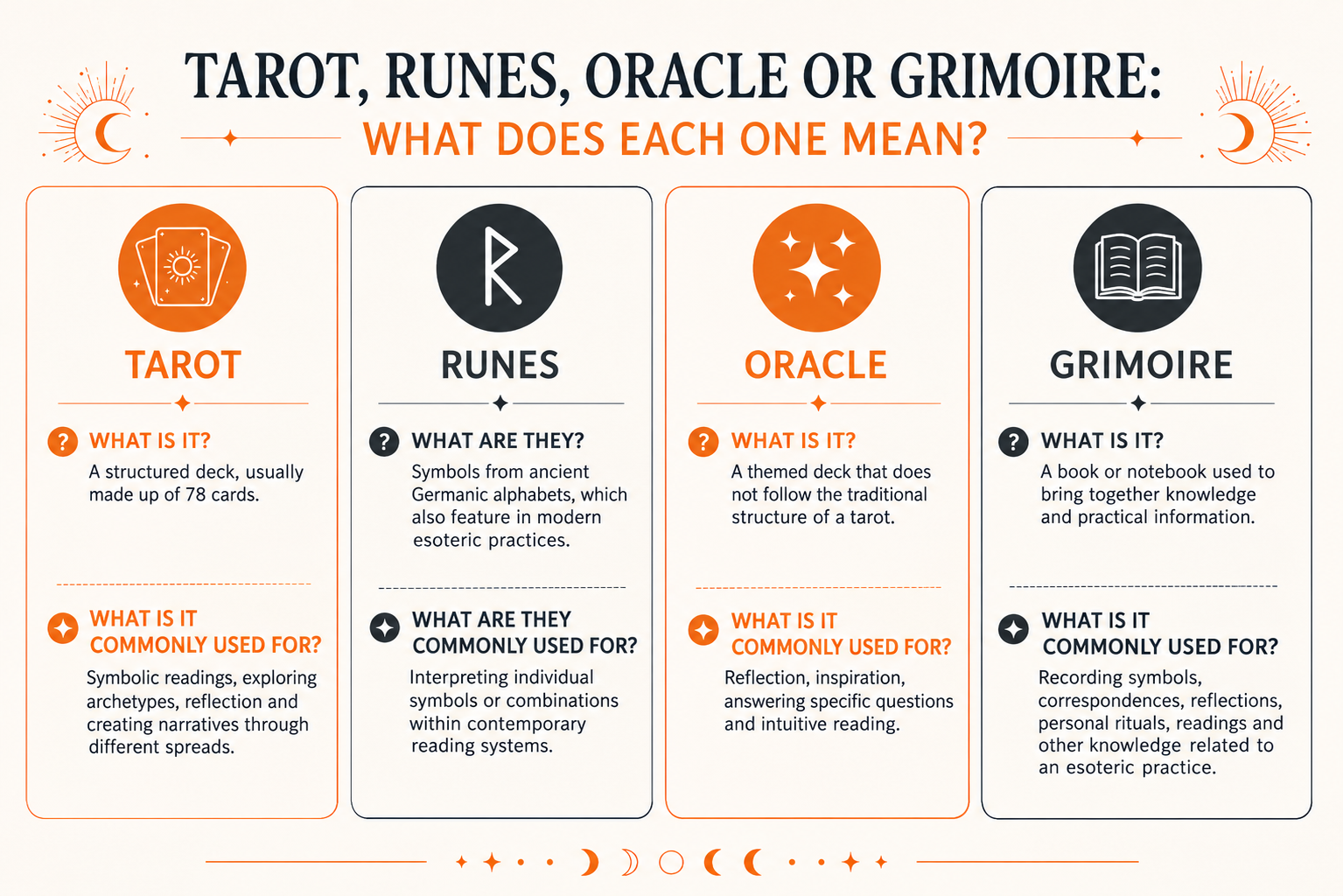
Tarot follows an established card structure, whereas oracle decks can have entirely different formats and interpretation methods. Runes originated as characters in ancient writing systems before being adopted into modern spiritual practices. A grimoire, meanwhile, is primarily a book used to record knowledge, rituals and personal observations.
Understanding these distinctions makes it easier for beginners to choose a starting point. It can also help retailers create a more thoughtful and accessible selection of esoteric products.
This guide explores these tools through their historical, cultural and symbolic significance, along with their use in spiritual practices and personal reflection. They are not presented as scientifically validated methods of predicting future events.
What Are Divination Tools?
The term divination tools covers a broad range of objects and systems traditionally associated with interpreting signs, exploring questions and assigning meaning to symbols.
There is no single approach to divination.
Some traditions use illustrated cards, while others draw on engraved objects, written characters, stones or specific patterns of movement.
Today, many people also incorporate these tools into reflective activities such as journaling, meditation or creative exploration. In these contexts, a reading may serve as an invitation to consider different perspectives rather than a literal prediction of what will happen.
Historical background adds another layer of understanding.
A contemporary tarot deck, a commercially produced rune set and a notebook designed as a grimoire may all appear in the same esoteric product collection, despite having very different origins and functions.
Tarot: Exploring Meaning Through Cards and Symbols
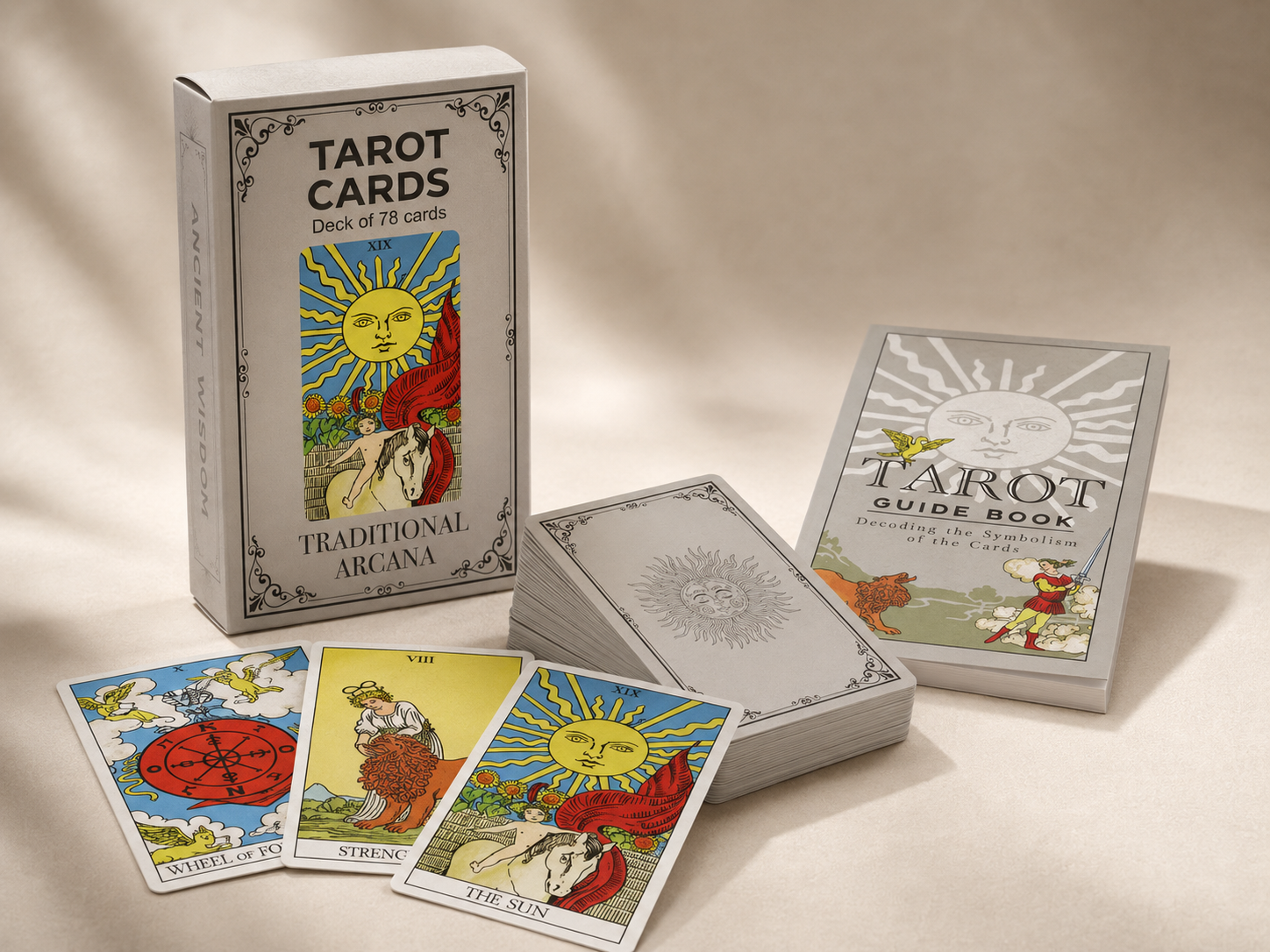
Tarot is a structured card system. Its best-known modern format contains 78 cards, divided into 56 suit cards and 22 cards traditionally grouped as the Major Arcana, including The Fool.
The earliest known tarot decks emerged in northern Italy during the 15th century, initially as playing cards. Their connection with occult traditions and divination became widespread centuries later.
Modern tarot readings typically involve drawing one or more cards and examining their imagery, symbolic associations, positions within a spread and relationships with neighbouring cards.
Is Tarot Suitable for Beginners?
Absolutely. Tarot can be particularly appealing to anyone who enjoys discovering symbolism through a clearly organised system.
And there's no need to learn the meanings of all 78 cards immediately.
A simple introduction is to select a deck with artwork you find easy to understand, explore its accompanying guidebook and practise with one-, two- or three-card spreads.
At AW Artisan Europe, you'll find the Traditional Arcana Tarot Deck, TarotC-05, featuring 78 cards and an accompanying guidebook. It's a useful starting point for anyone interested in exploring tarot imagery, learning traditional card meanings and experimenting with different reading layouts.
What Are Runes?
Before becoming popular items in esoteric shops, runes were originally letters used in ancient writing systems.
Various Germanic peoples used runic alphabets to create inscriptions on stone, wood, weapons, jewellery, coins and everyday objects. These alphabets evolved over time, with different forms appearing across regions and historical periods.
This makes it important to distinguish between historical runic alphabets and modern rune sets designed for symbolic readings.
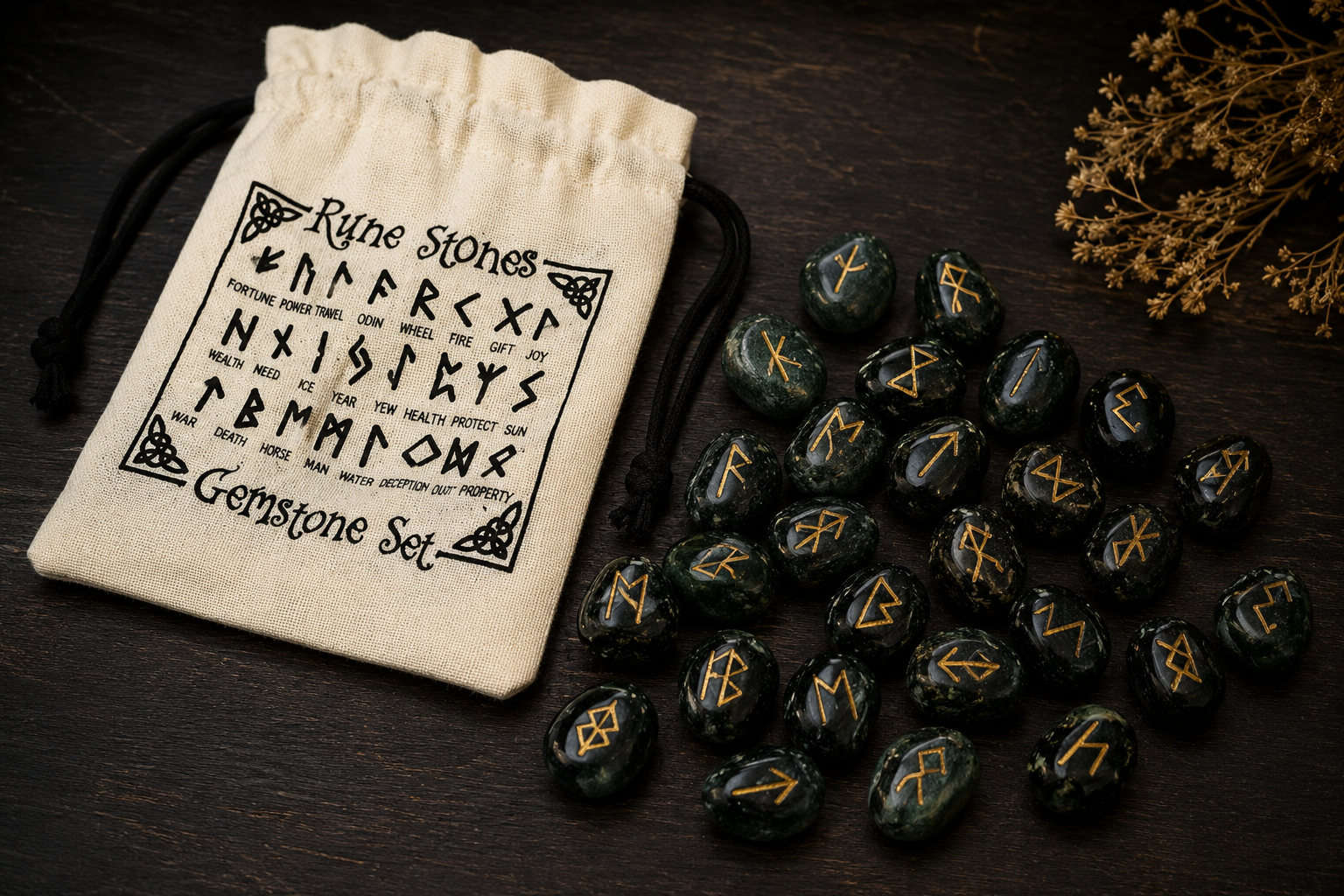
Today, rune sets are often made from natural stones or minerals, with individual symbols engraved onto each piece. Many are presented in a fabric pouch for convenient storage.
One example is the Lapis Lazuli Rune Set, Rune-49, featuring engraved lapis lazuli stones supplied in a printed cotton pouch. AW's rune collection typically includes 25 stones: 24 engraved with runic symbols and one blank stone. The additional blank stone is a feature of certain modern divination systems rather than traditional runic alphabets.
How Do You Read Runes?
In contemporary spiritual practices, rune readings can take several forms. Some people draw a single rune to reflect on a particular question, while others select several stones or arrange them in a spread on a flat surface.
The meaning of a reading depends on the interpretative system being followed, the individual symbols selected and how they relate to one another.
You may also encounter terms such as witch runes or witches' runes when browsing esoteric products. Although these expressions are common in modern spiritual and retail settings, they do not refer to one universally recognised historical runic system.
Understanding this distinction helps beginners explore rune symbolism while appreciating the difference between ancient writing traditions and their modern esoteric interpretations.
 What Are Oracle Cards?
One of the most common questions among beginners is what's the difference between tarot and oracle cards?
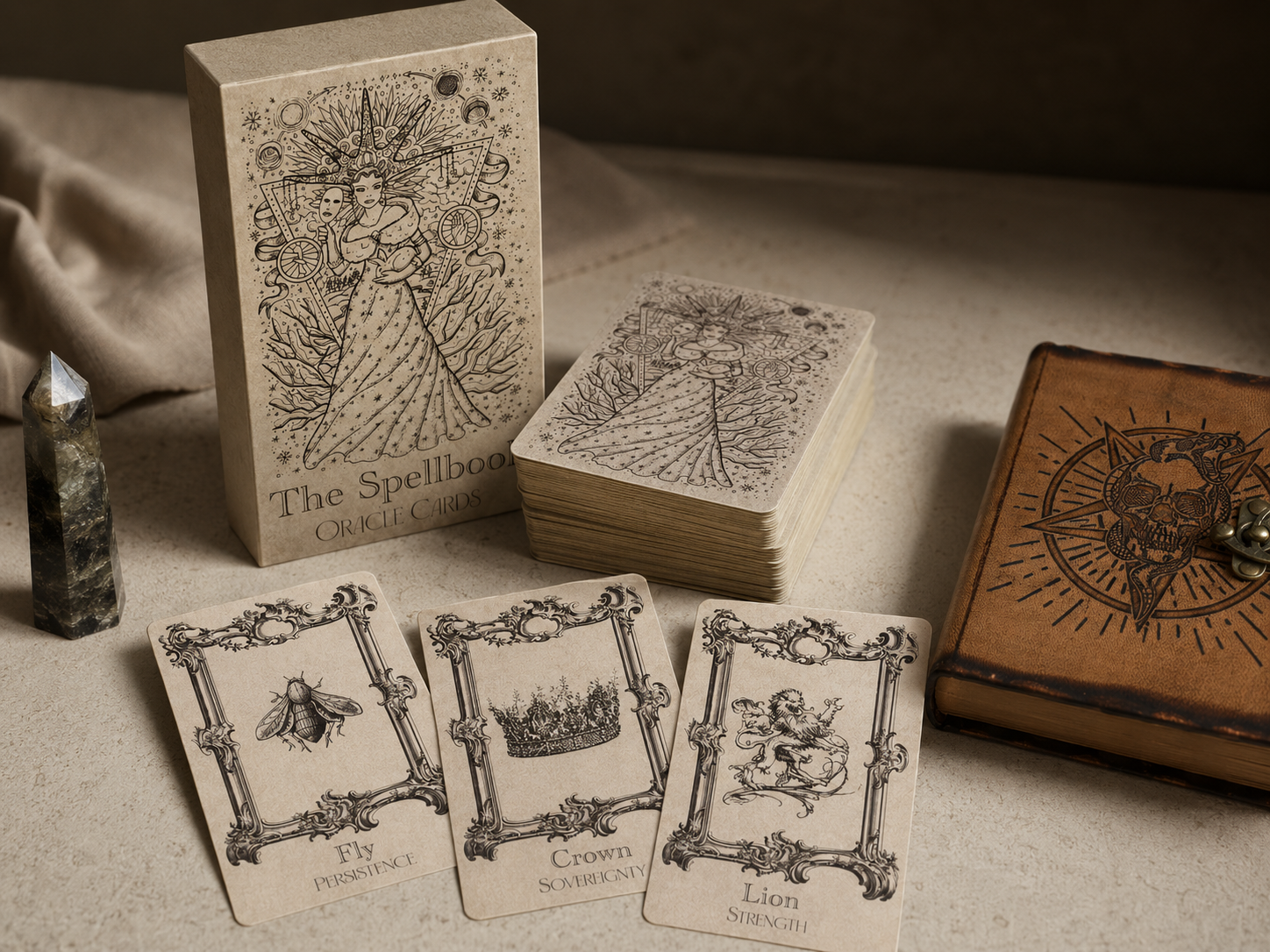
While tarot follows a fairly consistent structure, oracle decks offer much more creative freedom. Their creators can choose the number of cards, themes, categories and interpretation methods, making each deck a unique experience.
This flexibility makes oracle cards particularly appealing to beginners who prefer exploring visual symbolism, inspirational messages or specific themes without having to learn an extensive system of traditional card meanings.
At AW Artisan Europe, you'll discover a selection of 40-card oracle decks, including OCards-02 Ethereal Waters, OCards-04 Celestial Energy Atlas, OCards-03 Crystals & Elixirs and OCards-01 Book of Spells. Each offers a different creative approach to symbolic readings, personal reflection and intuitive exploration.
What Is a Grimoire?
Throughout history, the term grimoire has referred to a wide variety of books and manuscripts containing magical knowledge, ritual instructions, symbolic y
correspondences, invocations and other material associated with esoteric traditions.
There has never been a single universal format for a grimoire.
For example, European manuscripts dating from the 16th and 17th centuries contain collections of pentacles, planetary correspondences, ritual practices and texts drawn from different traditions and historical sources.
Today, however, the idea of a grimoire can take on a much more personal meaning.
A witch's grimoire might simply be a notebook dedicated to recording tarot interpretations, rune meanings, symbolic associations, card spreads, personal reflections, spiritual practices and interesting discoveries.
You don't necessarily need a book specifically labelled as a grimoire to create one.
A beautifully crafted journal or handmade notebook can become a personal collection of knowledge, creativity and meaningful observations, developed over time.
For retailers looking to introduce this concept to their customers, explore the leather notebooks available at AW Artisan Europe.
With their handcrafted appearance and vintage-inspired details, these notebooks make an attractive choice for creating a personalised grimoire, keeping a travel journal or simply recording thoughts and creative ideas.
They also offer an interesting gifting opportunity for writers, travellers, stationery enthusiasts and customers interested in esoteric traditions, making them a versatile addition to both spiritual and stationery collections.
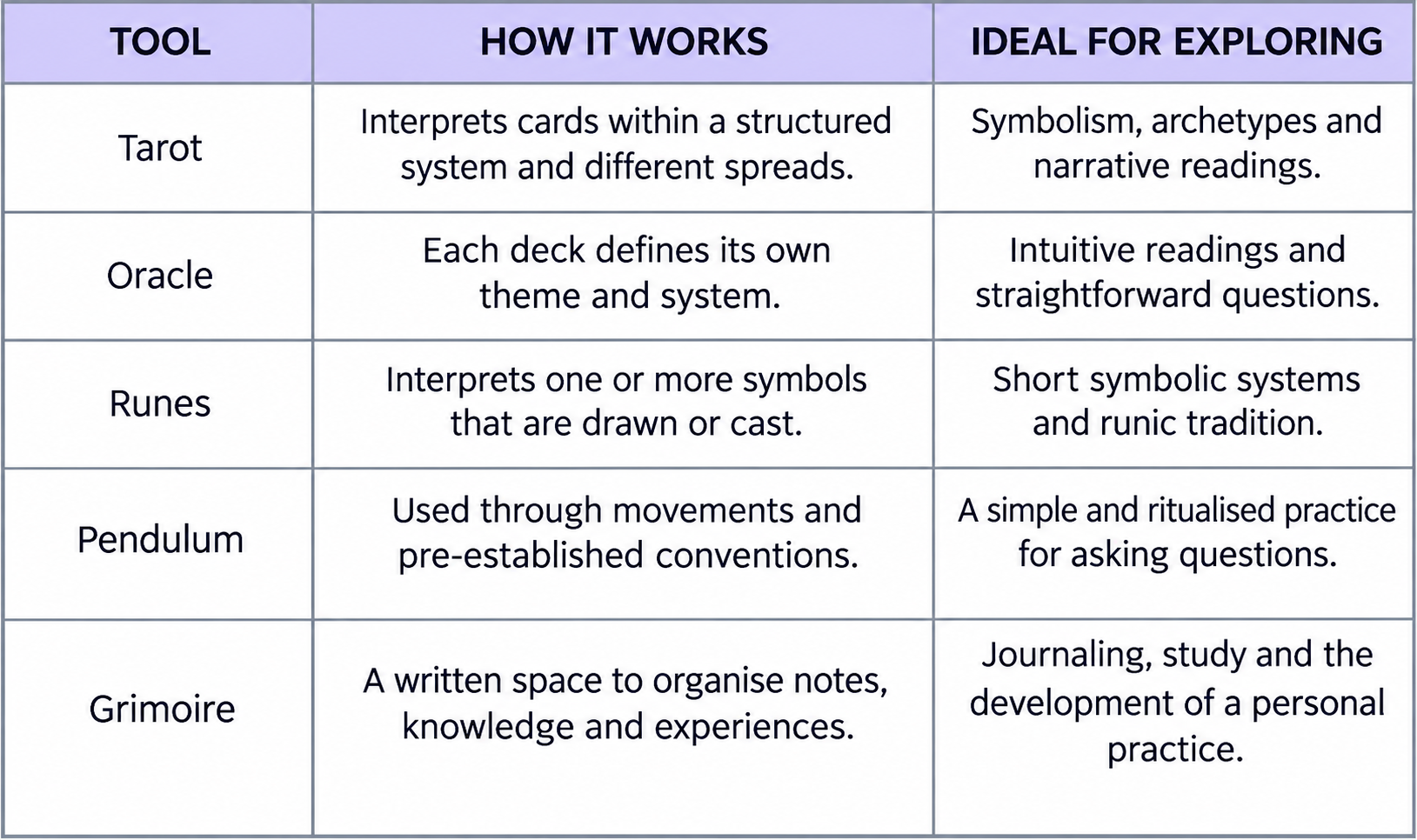
Tarot, Oracle Cards, Runes, Pendulums or Grimoires: What's the Difference?
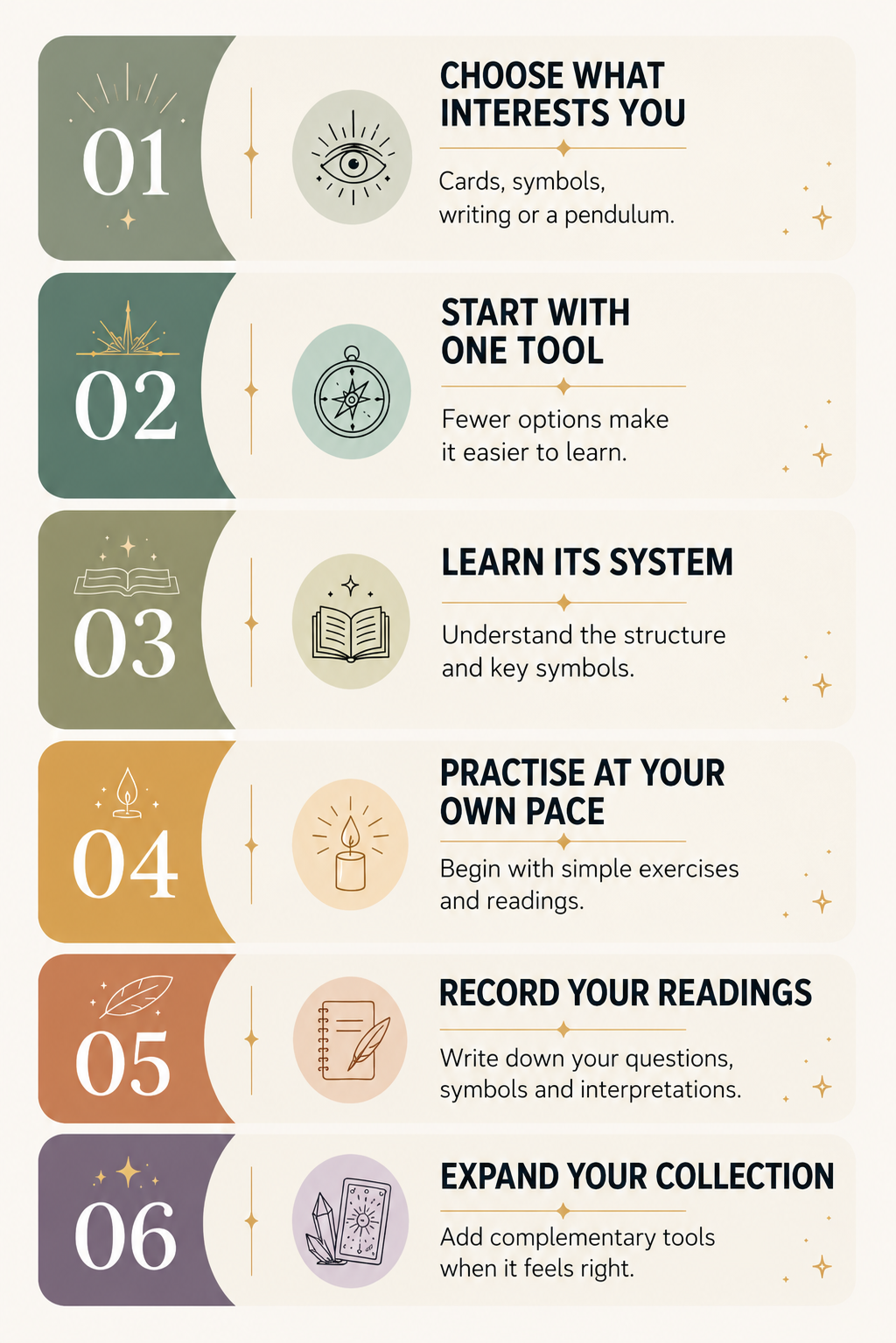
What Should You Choose as a Beginner?
There's no need to invest in five different divination systems when you're just starting out.
Finding the right tool is less about choosing the one considered the "best" and more about discovering which approach suits your interests and learning style.
Beginner's Checklist: How to Get Started
Discover what interests you. Do you prefer illustrated cards, meaningful symbols, writing or a hands-on tool such as a pendulum?
Start with one tool. Taking the time to understand a single system is often more rewarding than collecting several at once.
Explore its symbolism. Familiarise yourself with its structure, traditional meanings and historical or cultural background.
Practise at your own pace. Begin with simple exercises and allow your understanding to develop naturally through experience.
Keep a record of your readings. A personal journal can help you revisit previous interpretations, reflect on your experiences and see how your perspective changes over time.
Build your collection gradually. Introduce additional tools when you're ready to explore new techniques or expand your knowledge.
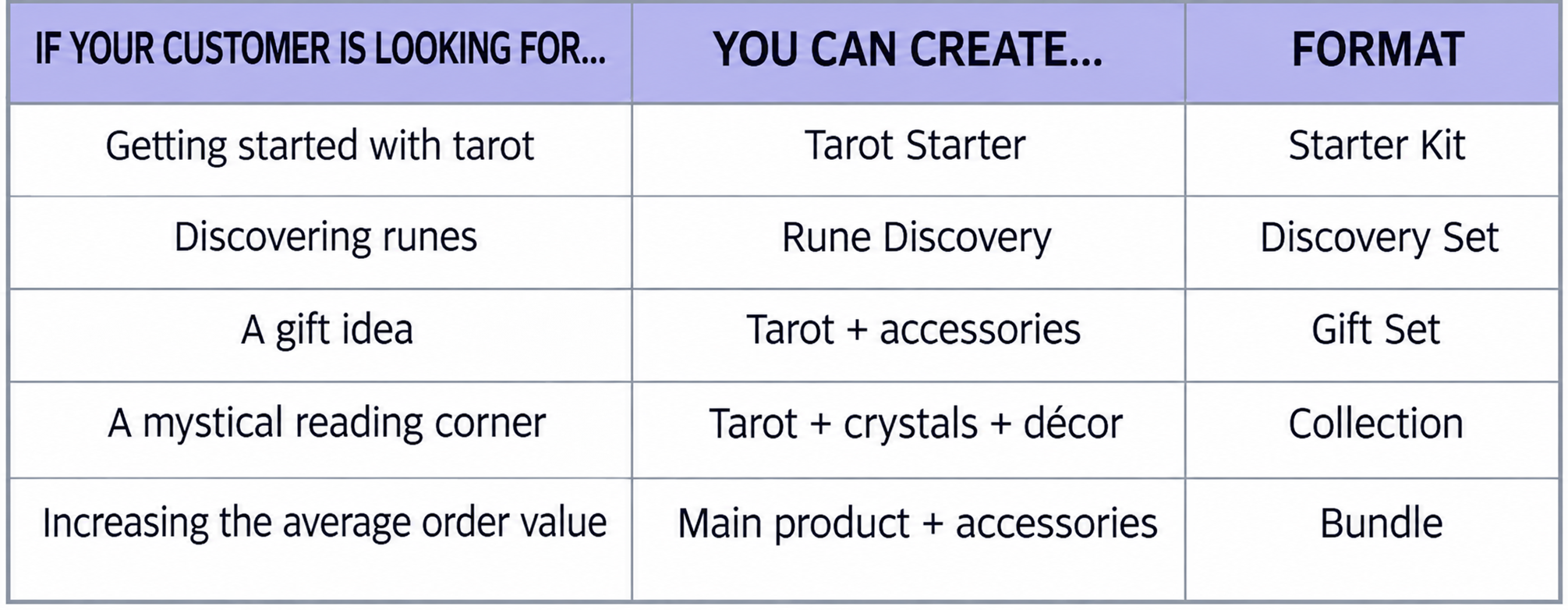
Can You Combine Tarot, Runes and Other Divination Tools?
Yes! Many people enjoy bringing different symbolic tools together as part of their personal spiritual or reflective practices.
Combining them doesn't necessarily make a reading more powerful or produce more accurate results. Instead, it offers different ways to explore ideas, interpret symbolism and develop a personal routine.
Tarot + Journaling
Draw your cards, then write down their meanings, your initial impressions and any questions that arise. Over time, your journal becomes a valuable record of your interpretations.
Runes + Pendulum
Explore two distinct symbolic systems within the same practice, while keeping their individual methods and interpretations separate.
Oracle Cards + Crystals
Crystals can complement an oracle reading as decorative elements, personal objects or visual features that help create an inviting space.
Tarot + Grimoire
Turn each tarot reading into a learning opportunity. Record card meanings, recurring symbols, personal associations and reflections in a dedicated grimoire.
Esoteric Products: A Growing Category for Dropshipping Stores
For online retailers, one of the most interesting aspects of the esoteric product category is how naturally different items complement one another.
Someone discovering tarot may also be interested in a reading cloth, a decorative journal, a pendulum or accessories for creating a personal reading space.
The same applies to customers exploring runes, oracle cards or other symbolic traditions.
Rather than displaying hundreds of unrelated items, a dropshipping store can create carefully curated collections based on specific interests:
Getting started with tarot
Exploring runes and their symbolism
Creating a personal tarot reading corner
Gift ideas for esoteric enthusiasts
Tarot cards and journaling accessories
Oracle decks and decorative crystals
This approach makes it easier for customers to discover relevant products while creating natural opportunities for cross-selling and complementary purchases.
Don't Just Sell Tarot Cards: Create a Complete Experience
A single product can become the starting point for an appealing themed collection.
By combining complementary items, retailers can offer customers a more inspiring shopping experience without having to create entirely new products.
Tarot Starter Collection
TarotC-05 + Lokta-14 + SpecMP-77
Traditional tarot deck + journal + quartz pendulum.
An accessible introduction to tarot, bringing together cards, writing materials and an additional symbolic tool.
Rune Discovery Collection
Rune-49 + SpecMP-77 + AltC-04
Lapis lazuli runes + pendulum + moon and sun altar cloth.
A coordinated selection for customers interested in rune symbolism and contemporary esoteric practices.
Intuitive Reflection Collection
OCards-03 + GemPt-03 + Lokta-14
Oracle cards + clear quartz point + journal.
A thoughtful combination for exploring illustrated messages, writing personal reflections and creating a decorative reading space.
All these products are part of AW's existing ranges, allowing retailers to build themed online collections without physically altering or repackaging the individual items.
5 Esoteric Product Collection Ideas for Your Online Store
1. Tarot for Beginners
Who is it for?
Customers who are completely new to tarot and want an accessible introduction to card readings.
Suggested products
TarotC-05 + Lokta-14 + SpecMP-77.
Suggested marketing message
"Discover a simple way to begin your tarot journey, with cards to explore, a journal for your reflections and accessories to complement your practice."
2. Witch's Tarot Reading Collection
Who is it for?
Customers drawn to modern witchcraft aesthetics, mystical illustrations and coordinated esoteric accessories.
Suggested products
TarotC-16 Witch's Tarot + TarotC-12 Ancient Witch Reading Cloth + TarotB-06 Moon Tray with Card Holder.
Suggested marketing message
"Create your own enchanting tarot reading space with beautifully illustrated cards and complementary accessories designed to bring your mystical collection together."
3. Discover the World of Runes
Who is it for?
People who are curious about symbolic traditions and want to explore an alternative to traditional card-based readings.
Suggested products
Rune-49 + SpecMP-77 + AltC-04.
Suggested marketing message
"Explore the fascinating symbolism of runes with a carefully selected collection of engraved stones and complementary esoteric accessories."
4. Oracle Cards & Journaling
Who is it for?
Customers interested in intuitive card readings, creative writing, mindfulness and personal reflection.
Suggested products
OCards-02 or OCards-03 + Lokta-14 + GemPt-03.
Suggested marketing message
"Choose a card, explore its imagery and capture your thoughts in a personal journal. A simple way to bring creativity and reflection into your daily routine."
5. Create a Mystical Reading Corner
Who is it for?
Customers who want to create an attractive esoteric-inspired space at home, combining decorative objects with their favourite cards.
Suggested products
TarotC-15 Moon Face + AWCball-02 40 mm Crystal Ball with Stand + AltC-04 Moon and Sun Altar Cloth.
Suggested marketing message
"Transform a small corner of your home into a mystical retreat with symbolic cards, decorative crystals and celestial-inspired accessories."
Common Mistakes to Avoid
Buying Too Many Tools at the Beginning
Owning more products doesn't necessarily mean you'll learn more. Starting with a smaller selection gives you time to understand each tool and develop your knowledge.
Choosing Products Based on Appearance Alone
Beautiful artwork and attractive packaging certainly matter, but it's equally important to understand how a particular tarot deck, oracle set or collection of runes works.
Skipping the Learning Process
Every divination tool has its own structure, symbolism and interpretation methods. Tarot and oracle cards, for example, are not interchangeable systems.
Confusing Tarot with Oracle Cards
Unlike traditional tarot, oracle decks don't need to contain 78 cards or follow the Major and Minor Arcana structure. Each oracle collection may have its own themes, card meanings and reading methods.
Presenting Interpretations as Guaranteed Predictions
Divination tools belong to symbolic and spiritual traditions. They are not scientifically proven methods of predicting future events, so interpretations should never be presented as guaranteed outcomes.
Making Absolute Spiritual Claims
Avoid promising that a particular crystal, card or ritual will produce a specific result. Instead, focus on symbolism, cultural associations, traditional uses and personal experiences.
Copying Supplier Product Descriptions
Simply reproducing a supplier's text does little to distinguish your online store. Add original explanations, practical examples, helpful comparisons and relevant information that makes choosing a product easier.
Forgetting to Explain What's Included
Small details can make a big difference when shopping online. Clearly indicate the number of cards or stones, included guidebooks, storage pouches, materials and any additional accessories.
How to Sell Tarot, Runes and Esoteric Products More Effectively
Use High-Quality Product Photography
Don't limit your product listings to photographs of the packaging.
Whenever possible, include images showing the cards themselves, engraved runes, fabric pouches, display stands and distinctive product details.
Lifestyle photography can also help customers imagine how an item might look in their home, shop or personal collection.
Write Informative, Original Product Descriptions
Help visitors understand exactly what they're buying.
Explain the product's purpose, its contents, materials, symbolism and distinguishing features. Where relevant, highlight how it differs from similar tarot decks, oracle cards or rune sets.
Organise Your Catalogue Around Customer Interests
Create clear categories for tarot cards, oracle decks, rune sets, pendulums, journals and esoteric accessories.
An intuitive navigation structure helps shoppers find the products they're interested in without having to browse unrelated collections.
Introduce Themed Collections
A carefully curated category such as Tarot for Beginners can be more appealing and easier to navigate than a page featuring dozens of products without a clear connection.
Consider grouping products by experience, interest or intended use to make your catalogue more inviting.
Develop Helpful SEO Content
Build your website's content around questions customers are genuinely searching for.
Articles answering queries such as "What are runes?", "What is a grimoire?" and "Tarot vs oracle cards: what's the difference?" can help attract relevant visitors while introducing them to your product categories.
Include natural internal links to related products and collections, ensuring the content remains genuinely useful rather than simply promotional.
Encourage Complementary Purchases
Thoughtful product recommendations can help customers discover accessories they might otherwise overlook.
For example, a tarot deck can be paired with a journal for recording readings. A rune set might be displayed alongside a reading cloth or pendulum, while oracle cards can complement decorative crystals and other esoteric accessories.
These combinations create opportunities for cross-selling and increasing average order value without requiring customers to purchase unnecessary items.
Make Your Store Different from the Supplier's Catalogue
Your online shop should offer more than a duplicate of a wholesale product listing.
Original descriptions tailored to your audience, carefully selected imagery, educational content and relevant product suggestions can turn a familiar item into a much more engaging shopping experience.
The goal is to help customers feel informed, inspired and confident about their choices.
Frequently Asked Questions About Tarot, Runes and Grimoires
What Are Runes?
Runes are characters originating from historical alphabets used by various Germanic peoples. Today, runic symbols also appear on modern sets of engraved stones, often used for symbolic interpretation and contemporary esoteric practices.
What Are Witch Runes?
The terms witch runes and witches' runes are commonly used in modern esoteric settings to describe different symbolic systems. These should not automatically be confused with historical runic alphabets, as their origins, structures and interpretations can vary.
How Do You Use Runes?
In contemporary rune-reading practices, participants may draw a single stone or select several runes to explore their individual meanings and relationships.
Interpretations depend on the particular system being followed, with different approaches to selecting, arranging and understanding the symbols.
What's the Difference Between Tarot and Oracle Cards?
Tarot traditionally follows an established structure, most commonly featuring 78 cards divided into the Major and Minor Arcana.
Oracle decks offer greater flexibility, allowing their creators to determine the number of cards, themes, artwork and methods of interpretation.
Which Tarot Deck Is Best for Beginners?
A beginner-friendly tarot deck should ideally feature clear imagery, an accessible symbolic structure and an accompanying guidebook.
Choosing cards whose illustrations appeal to you can make learning the meanings and practising basic spreads more enjoyable.
What Is a Witch's Grimoire?
In modern esoteric practices, a witch's grimoire is often a personal book or journal used to collect symbolic meanings, correspondences, rituals, card spreads, reflections and other information connected to an individual's spiritual interests.
What Is a Grimoire Used For?
A grimoire can help organise knowledge, document experiences, record tarot or rune readings and preserve personal observations.
It can also serve as a creative journal that develops alongside someone's understanding of different esoteric traditions.
Can Tarot and Runes Be Used Together?
Yes. Some people incorporate tarot and runes into the same personal practice, using each to explore different symbolic perspectives.
However, it's helpful to understand the principles of each system individually rather than treating their meanings as interchangeable.
What Do You Need to Start Reading Tarot?
A tarot deck is enough to begin.
An accompanying guidebook can help explain the cards and their traditional associations, while a notebook is useful for recording spreads, questions and interpretations.
There's no need to invest in numerous accessories before learning the basics.
What Are the Different Types of Divination Tools?
Some of the best-known examples include tarot cards, oracle decks, runes and pendulums.
There are also many other historical and contemporary divination systems, each with its own cultural background, symbolism and methods of interpretation.
You Don't Need Ten Different Tools to Get Started
Tarot cards, runes, oracle decks and grimoires each offer a distinctive way to explore symbolism, esoteric traditions and personal reflection.
There's no need to master every system at once.
Start with something that genuinely interests you, take time to understand its background and discover how it fits into your own approach.
As your knowledge grows, you might choose to introduce a journal, pendulum, crystals, another card deck or decorative accessories that complement your interests.
The most rewarding collection isn't necessarily the largest. It's one in which every item has a purpose and contributes something meaningful to the experience.
Discover More Ideas for Your Shop at AW Artisan Europe
Esoteric Products to Complement Your Collection
Explore our selection of tarot decks, rune sets, pendulums, crystals and mystical accessories. Discover how complementary products can help you create themed collections, enhance your online store's presentation and introduce customers to new items that suit their interests.
Explore Our Aromatherapy Range for Resale
Discover essential oils, aromatherapy blends, diffusers and complementary accessories at AW Artisan Europe. Find fresh inspiration for expanding your product catalogue with fragrances, aromatic products and accessories designed for customers interested in relaxation and everyday wellbeing.